Common Name: American papaw
Scientific Name: Asimina triloba
To increase our local biodiversity and support native insects and pollinators, we are planting our Raleigh, NC yard with native plants such as American papaw and will continue to document the North Carolina and Southeast U.S. native species we have trialed. This includes flowering annuals and perennials, trees, shrubs, sedges and vines. An excellent resource to learn more about the required growing conditions of American papaw and other plants native in your state is the Lady Bird Johnson Wildflower Center’s tool – FIND PLANT. Click for a table of all our native plants.
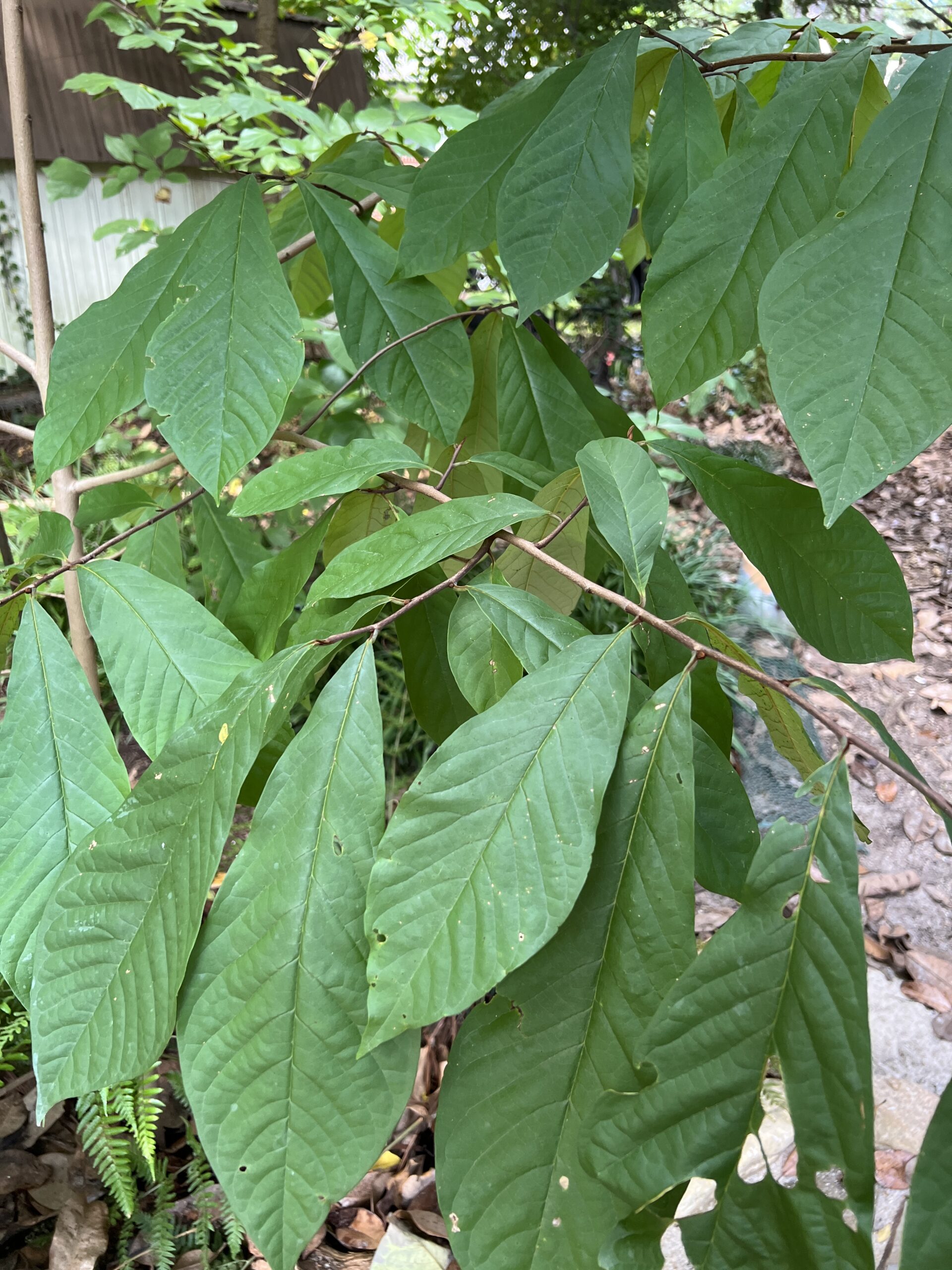
| Common Name | American Papaw (also spelled Pawpaw) |
| Scientific Name | Asimina triloba |
| Plant Type | Deciduous understory tree |
| Native Range | Eastern and southeastern United States, including North Carolina |
| USDA Hardiness Zones | 5–9 |
| Light Requirements | Full sun to partial shade; young trees benefit from shade, while mature trees produce the best fruit in full sun. |
| Water Requirements | Medium; prefers moist, well-drained soils but tolerates occasional flooding once established. |
| Mature Size | 15–30 ft tall and 15–20 ft wide |
| Bloom Time | March–May (spring) |
| Flower Color | Maroon to dark purple |
| Wildlife Value | Larval host plant for the Zebra Swallowtail butterfly; flowers attract beetles and flies for pollination; fruit is eaten by birds, foxes, raccoons, opossums, squirrels, and other wildlife. |
| Landscape Uses | Native edible landscape, woodland gardens, rain gardens, naturalized areas, and backyard orchards. |
| Interesting Fact | American papaw produces the largest edible fruit native to North America. The fruit has a creamy texture and a tropical flavor often compared to banana, mango, and custard. Most varieties produce better fruit when cross-pollinated with a genetically different tree. |