Testing Glazes and Clay Bodies in the Electric Kiln
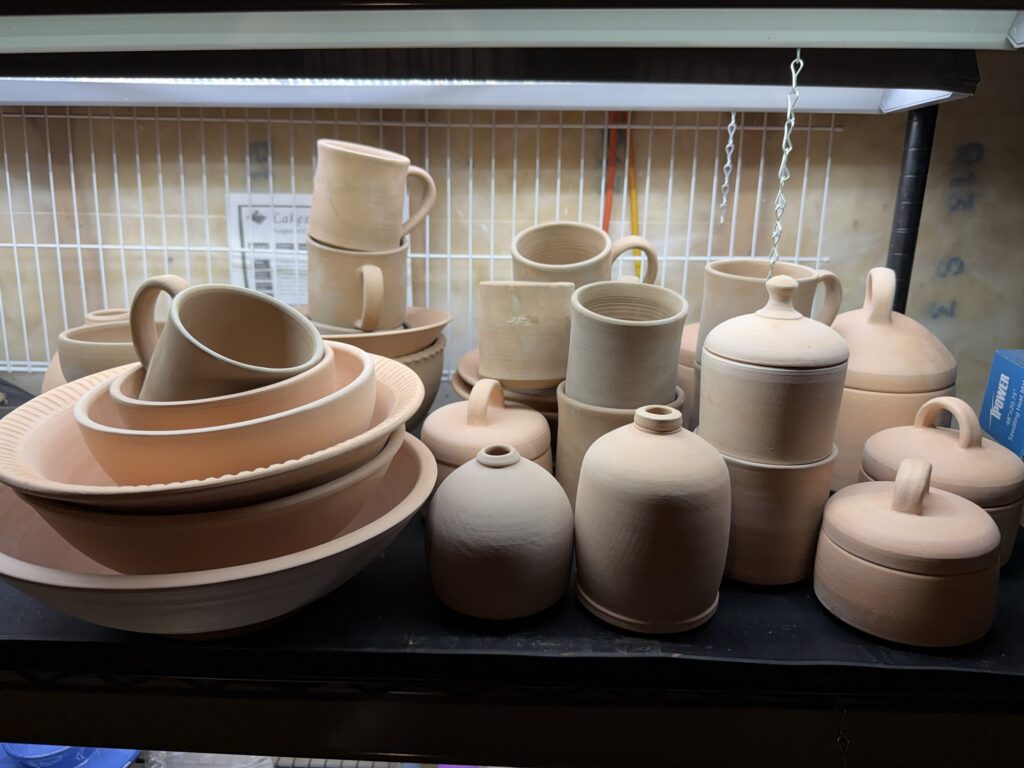
It’s been years since I ran a glaze firing from home, and this weekend we fired a load in preparation for a popup shop I’m participating in at Nadeau Furniture next weekend. I’ve primarily been working out of Pullen Arts Center, but I had a large stack of bisqueware that I could not fire at Pullen because the clay was purchased elsewhere. The three clay bodies I was firing were Kentucky Speckled Brown Bear (KSBB), Standard Clay 266, and the last of Highwater Clay Speckled Brownstone (HCSB). Sadly Highwater Clays in Asheville shut down after the devastation of Helene, so this was less in effort to test the clay than it was to test the glazes on a medium brown speckled clay.
Materials
I wanted to test three glaze combinations on KSBB and 266 that I regularly use at Pullen on Bmix-5 and Standard 112, which is close to HCSP. The combinations are Ranch Butter over Millicent’s Curtains, Plastic White over Dijon, and Dove Gray over VC Satin White. These glazes are mixed at Pullen and not commercially available, but if they worked well on my clay bodies at home, I could potentially mix them up in my home studio. Ceramica sells a dry mix Millicent’s Curtains, which I believe is probably a close match to the studio recipe. I took a batch of mugs to Pullen and dipped them as I normally do. While I kept them separated in the garage, I put a batch of them in a tote bag and couldn’t see the speckles on the bisqueware.
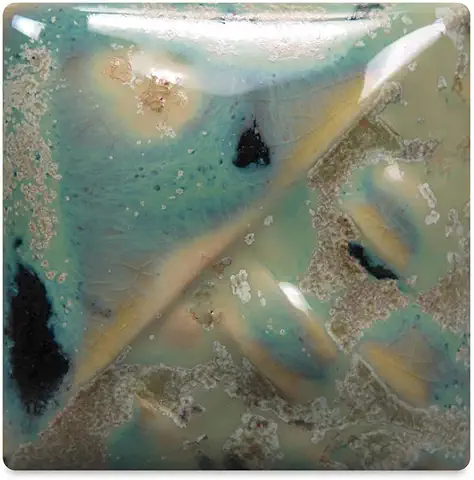
I picked up Mayco brush on glazes from Ceramica based on combinations I saw online – Birch SW-131, Aurora Green SW-146, Milk Glass SW-223 and Black Walnut SW-104. These brush on glazes are supposed to be applied in 2 – 3 coatings, allowed to dry out between each.
Finally, I gave my Potter’s Choice Indigo Float a good mix and dipped three mugs in it. In all of these applications, I really struggled to tell the difference between the 266 and KSBB.
Results
What I wanted out of Mayco Birch was a creamy uniform white with nice breaks over edges, like I saw online. What I got out of birch was a light brown with pinkish white float on the Speckled Brownstone, a semi transparent speckled cream float on the 266 and KSBB, with lovely pooling in the texture on the KSBB and two colors of speckles – blueish black from the glaze and dark brown from the magnesium in the clay.
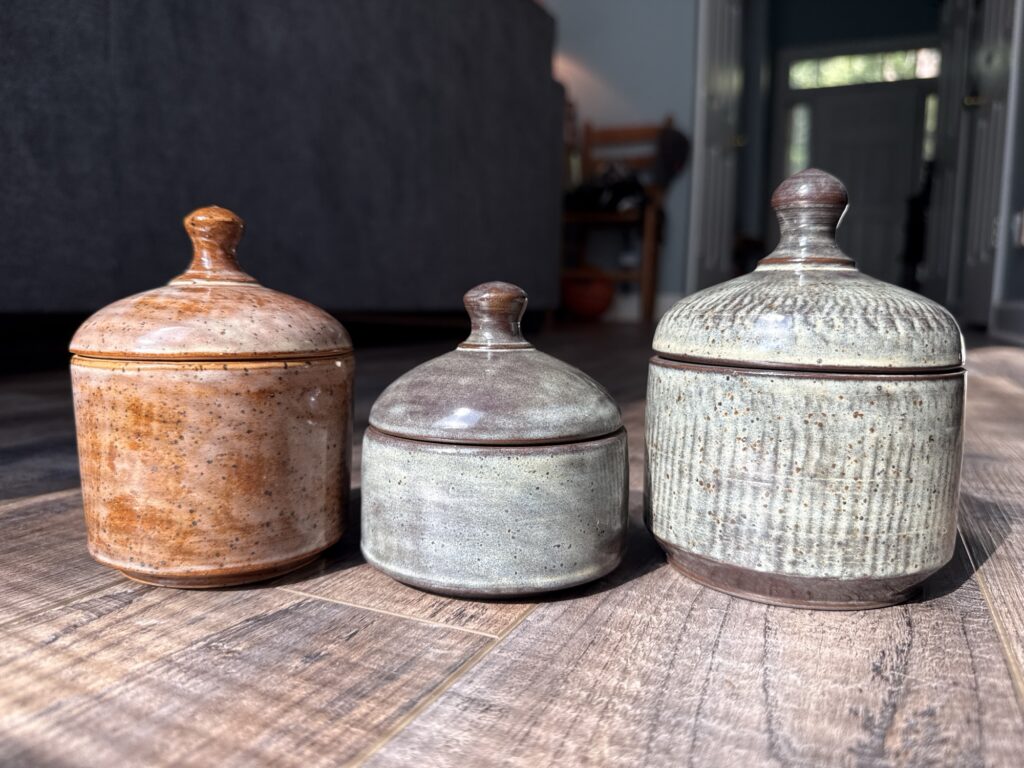
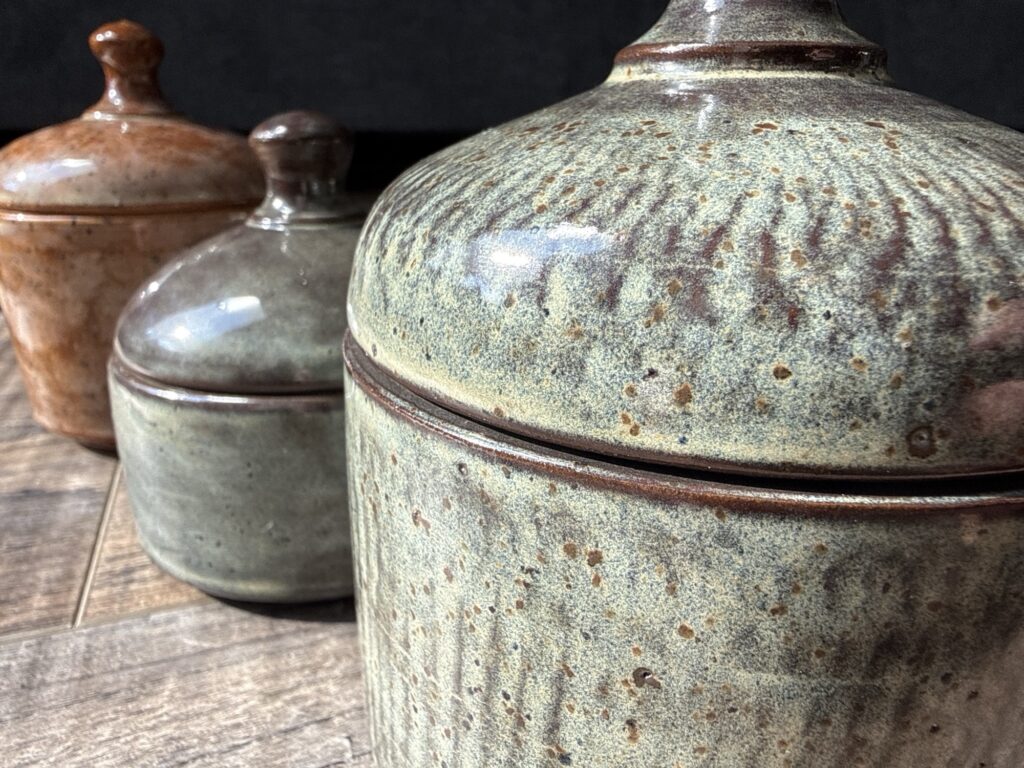
While I brushed on three coats, I suspect I needed to let more drying occur to build up the glaze thickness on the non-textured pieces, but I love the effect on the KSBB jar with chattering. I strongly dislike my application of Birch on the Speckled Brownstone and unfortunately have other pieces with it. I may do another application and refire to see if it can be improved.
Ranch Butter over Millicent’s Curtains is a combination that’s my go-to at Pullen. It works well on 112 and Bmix-5 clay, which is a white-bodied clay. The bowl is the Bmix5 clay, and the bottle is 112, both fired in the past year. The mug below was from this firing and is a 2-3 second dip in MC and a quick angled dip for 2 seconds in RB on the KSBB. I can tell it’s Speckled Brown Bear by the brown manganese streaks coming through the Ranch Butter glaze. I love how it breaks over the edges with the contrasting dark brown.
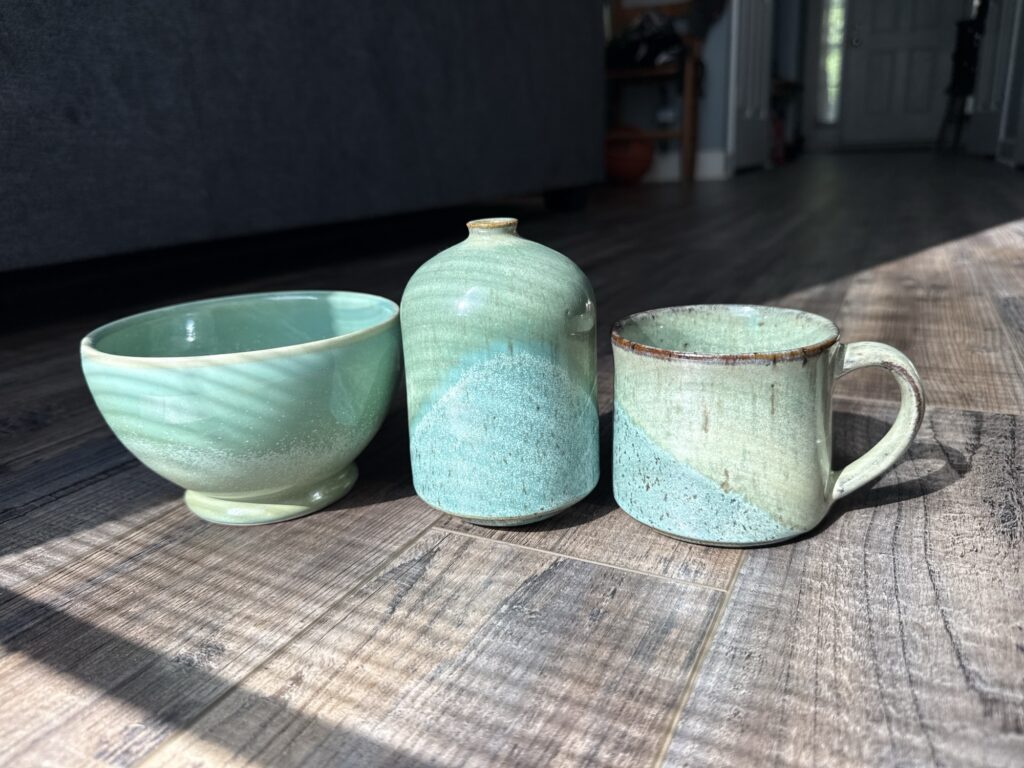
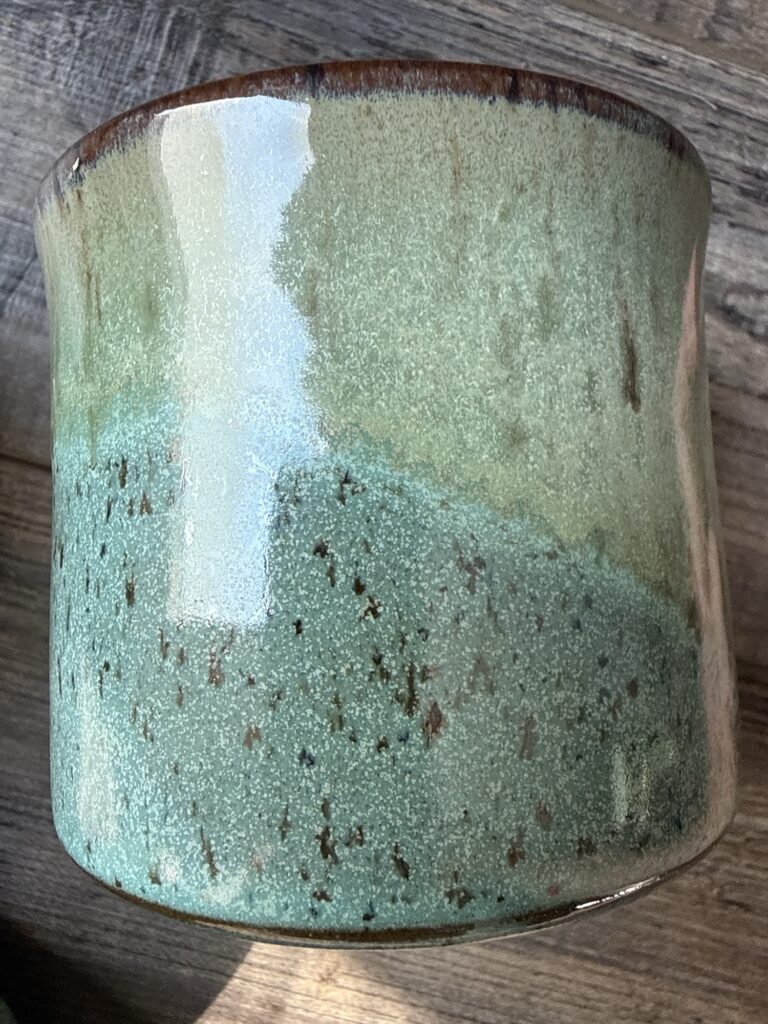
I prefer a more uneven line between the two glazes which I get more of on bowls as the angle of the bowl causes more cascading than the vertical walls of the mug and bottle. I was happy to see that the glazes performed similarly on KSBB in my home kiln, so my plan is to mix up a bucket of Millicent’s Curtains and find something that will play with it like Ranch Butter. I have two mugs in 266 with this same application that seemed to be far too thin on the Millicent’s Curtains. I will have to pick Pullen’s glaze mastermind brain and see if she’s noticed similar results with the 266 in the studio. It could be that my bisque was fired hotter and not as receptive to the glaze application.
Because I have a short attention span, I will review the rest of the results in another post.
This post contains affiliate links. Purchases made through my affiliate links give me a small commission to help run this blog, but don’t cost you any extra.